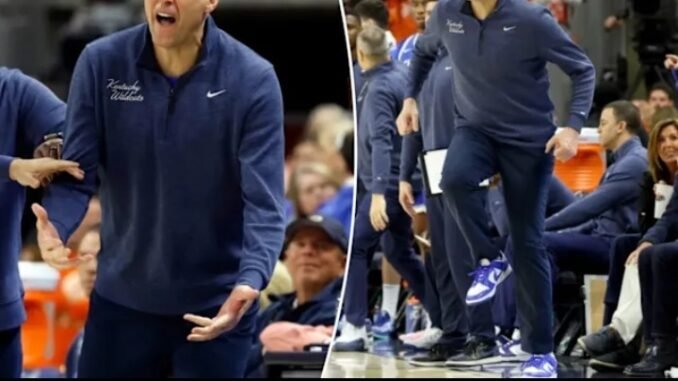
In the emotionally charged world of college basketball, heated reactions from coaches are not unusual. However, when Mark Pope publicly expressed frustration with referees after a recent Kentucky Wildcats men’s basketball game, it ignited a heated debate among fans, analysts, and the broader college basketball community. While Pope’s visible anger resonated with a segment of the passionate fan base known as Big Blue Nation, many observers believe the situation is far more complicated than simply blaming the officials.
The discussion surrounding the game has quickly grown into a broader conversation about accountability, execution, and the realities of high-level college basketball competition. Although officiating can sometimes influence the outcome of games, Kentucky’s performance suggests that the Wildcats have deeper issues to address.
The Emotional Post game Reaction
After the final buzzer, Pope did not hide his disappointment. Cameras captured him confronting the officiating crew, clearly unhappy with several calls made throughout the game. In post game comments, he hinted that certain decisions by the referees affected key moments and disrupted Kentucky’s rhythm.
For a coach known for his intensity and passion, the reaction was not entirely surprising. Pope has built a reputation as a leader who fiercely advocates for his players. When he believes his team has been treated unfairly, he tends to speak out.
However, emotional reactions immediately after a loss are often fueled by adrenaline and frustration. In the hours following the game, analysts began reviewing the tape, and a more nuanced narrative started to emerge.
Officiating: A Convenient Target
In basketball, officiating is one of the most visible and controversial elements of the game. Every whistle—or lack of one—can feel decisive, especially in tightly contested matchups. When a team loses, blaming the referees can become an easy explanation.
But relying solely on that narrative can sometimes obscure the bigger picture.
In Kentucky’s case, critics argue that focusing on the referees overlooks several factors that played a significant role in the outcome. These include missed opportunities, defensive breakdowns, and inconsistent offensive execution.
Even among supporters of the Wildcats, there is growing acknowledgment that the team had chances to win the game but failed to capitalize on them.
Kentucky’s Missed Opportunities
One of the most compelling arguments against blaming the officials entirely lies in Kentucky’s own performance.
Throughout the game, the Wildcats experienced several stretches where they struggled to maintain offensive momentum. Turnovers disrupted scoring opportunities, and missed free throws prevented the team from closing the gap during critical moments.
Free throws, in particular, are often described as the most controllable aspect of basketball. When a team leaves points at the line, it becomes harder to justify blaming external factors for a loss.
Additionally, Kentucky had moments where defensive lapses allowed their opponent to gain confidence and build runs. These sequences often occurred independently of any officiating decisions.
In other words, the Wildcats had multiple chances to dictate the outcome themselves.
The Split Within Big Blue Nation
No fan base in college basketball is more passionate or more vocal than Big Blue Nation. With millions of supporters across the country, opinions about the game quickly spread across social media and sports talk shows.
Unsurprisingly, the fan base is divided.
Some fans firmly support Pope’s stance, arguing that questionable officiating significantly impacted the game’s flow. They point to specific calls they believe were inconsistent or poorly timed.
Others, however, believe that focusing on referees distracts from the improvements Kentucky must make moving forward. These fans emphasize accountability and argue that championship-caliber teams must overcome adversity, including unfavorable calls.
The debate has intensified because both perspectives contain elements of truth.
The Reality of College Basketball Officiating
Officiating in college basketball is inherently challenging. Games move at incredible speed, and referees must make split-second decisions in front of thousands of spectators and millions of viewers.
Even with replay systems and experienced officiating crews, mistakes can happen. However, most games include questionable calls that affect both teams at different points.
This reality is why coaches often emphasize controlling what they can control effort, discipline, and execution.
While Kentucky may have legitimate grievances about certain calls, relying on that explanation alone risks overlooking areas that require improvement.
Leadership and Accountability
As the head coach, Pope carries the responsibility of guiding his team through adversity. Public criticism of referees can sometimes rally a fan base and protect players from blame, but it can also create a narrative that shifts attention away from internal development.
Successful programs typically strike a balance between advocating for fairness and emphasizing accountability.
Pope’s passion undoubtedly reflects his commitment to the team. Yet the broader conversation suggests that Kentucky’s path forward will depend more on adjustments and growth than on officiating debates.
What Kentucky Needs to Fix
If the Wildcats want to compete at the highest level, several areas demand attention:
1.Consistency on Offense
Kentucky’s scoring runs often came in bursts rather than sustained execution. Establishing a more reliable offensive rhythm will be crucial in future games.
2. Throw Efficiency Leaving points at the free-throw line can be costly. Improving accuracy in these moments could swing close contests in Kentucky’s favor.
3. Defensive Discipline. At times, the Wildcats allowed their opponent too many open looks or second-chance opportunities. Tightening defensive rotations and rebounding will be key.
4. Emotional Control
Maintaining composure during controversial moments can prevent distractions and keep the team focused on winning possessions.
The Bigger Picture
Kentucky basketball carries enormous expectations. The program’s rich history and passionate supporters create an environment where every loss sparks intense scrutiny.
However, the best teams use setbacks as opportunities for growth. Instead of dwelling on officiating controversies, the Wildcats must channel the frustration into improvement.
For Pope, the challenge lies in transforming a moment of anger into motivation for his players.
Moving Forward
The season is far from over, and Kentucky still has ample opportunities to prove its potential. If the Wildcats can address the issues exposed in this game, they could emerge stronger and more resilient.
In the long run, fans will remember how the team responded not the specific calls that sparked controversy.
The debate within Big Blue Nation may continue, but one reality remains clear: championships are rarely decided by referees alone. They are won by teams that execute better, adapt faster, and remain focused regardless of the circumstances.
Final Thoughts
Mark Pope’s frustration with the referees reflects the emotional intensity that defines college basketball. His reaction resonated with many fans who felt the Wildcats were treated unfairly.
Yet when the game is analyzed in full, it becomes clear that Kentucky’s loss cannot be attributed solely to officiating.
Missed opportunities, inconsistent execution, and defensive lapses all played significant roles. Recognizing these factors does not diminish the impact of questionable calls but it highlights the broader truth that winning teams must overcome them.
For Kentucky and Big Blue Nation, the path forward lies not in replaying the officiating controversy but in focusing on the improvements that can turn future close games into victories.
Conclusion
The heated reaction from Mark Pope after Kentucky’s game captured the emotional intensity that defines college basketball. His frustration with the referees resonated with many fans who felt the Wildcats were on the wrong end of several critical calls.
However, a deeper analysis shows that officiating alone cannot explain the outcome. Missed free throws, offensive inconsistency, and defensive lapses all played major roles in shaping the final result.
For the Kentucky Wildcats men’s basketball and their passionate supporters in Big Blue Nation, the challenge now is to move beyond the controversy and focus on growth.
The best teams learn from difficult moments. They recognize mistakes, adjust their strategies, and return stronger in the next game. If Kentucky can channel the frustration of this loss into motivation, the experience could ultimately become a turning point in their season.
In the end, championships are rarely determined by referees. They are earned through preparation, discipline, resilience, and the ability to perform when the pressure is highest.
Leave a Reply