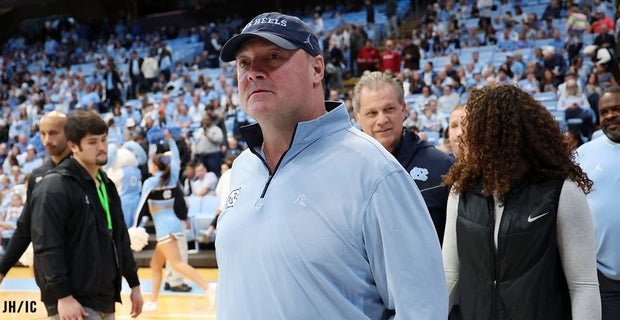
In just a few short years, the Atlantic Coast Conference has witnessed a dramatic transformation on the sidelines. What was once considered one of the most stable and tradition-rich leagues in college basketball is now seeing constant reshuffling of its coaching ranks. The days when legendary coaches held court for decades are fading, replaced by an era of rapid turnover, bold hires, and a relentless pressure to win.
It’s no longer just the players who transfer, graduate, or leave early for the NBA that create constant change—coaches are now moving almost as quickly. The “coaching carousel” within the ACC has become a nonstop spin, fueled by several factors: mismatched hires, retirements, poor on-court results, the lure of higher salaries, or simply the desire for a less stressful lifestyle.
The numbers tell the story. This marks the third straight season, and the sixth time in eight years, that two or more ACC head coaching jobs have changed hands. For the 2025–26 season alone, four new coaches are stepping in—making it the second consecutive year that four ACC programs are welcoming fresh leadership. Incredibly, thirteen head coaches have come and gone in the last four years alone, a statistic that speaks to just how turbulent these times are.

That turbulence brings uncertainty. Many of the newest hires are young and unproven, stepping into the spotlight for the very first time. Since 2023, four head coaches—Duke’s Jon Scheyer, Florida State’s Luke Loucks, Miami’s Jai Lucas, and Syracuse’s Adrian Autry—took over without prior head coaching experience. Some of them are thriving under the weight of expectations, while others are still learning how unforgiving the ACC can be.
Not every story has a happy ending. Virginia’s Ron Sanchez and Louisville’s Kenny Payne, both former players and homegrown program figures, were handed the reins in tough circumstances but failed to establish momentum and quickly flamed out. Their quick exits are a reminder that sentimentality doesn’t always translate into success.
Of course, with an expanded ACC comes more jobs to fill, which naturally leads to more turnover. More schools mean more pressure to win, and with that comes a higher likelihood of hiring mistakes and abrupt changes. This isn’t the first time the league has faced mass change—this is already the third time in 15 years that three or more schools have changed coaches in the same cycle.
Adding to the instability is the steady wave of Hall of Fame exits. Over the last few years, some of the most iconic coaching names in basketball history have stepped away. Roy Williams retired in 2021, Mike Krzyzewski in 2022, and Jim Boeheim in 2023. All three left behind towering legacies, decades of dominance, and an irreplaceable connection to their programs. Even Rick Pitino’s turbulent stint at Louisville ended years earlier, leaving the Cardinals in disarray until Pat Kelsey finally steadied the ship last season.
But not everyone is secure. Coaches like Earl Grant at Boston College and Steve Forbes at Wake Forest are still searching for breakthroughs. Grant’s Eagles have shown fight but only managed one winning record in his four-year tenure. Forbes has built competitive teams, but Wake Forest is still stuck in an eight-year NCAA Tournament drought. Meanwhile, Pitt’s Jeff Capel—another product of Krzyzewski’s coaching tree—has been given time despite just one NCAA appearance in seven seasons.
Other programs are banking on fresh blood with NBA experience. Georgia Tech’s Damon Stoudamire and Notre Dame’s Micah Shrewsberry, both entering their third ACC seasons, cut their teeth under Brad Stevens in Boston before jumping into the college spotlight. Their NBA backgrounds bring a modern perspective, though they too face the unforgiving reality of ACC basketball.
Yet, even amid all this upheaval, the ACC’s DNA remains strong. A third of the league’s 18 head coaches were born within the conference’s original footprint, ensuring that despite the high turnover, there’s still a deep-rooted connection to ACC culture and tradition.
In many ways, the league is in the middle of a generational shift. Gone are the icons who defined eras—Williams, Boeheim, Krzyzewski—and in their place stand younger, hungrier, and in some cases, unproven leaders. The conference is no longer defined by stability at the top, but by constant evolution. The question now is simple: which of these new faces will rise to carve out their own legacies, and which will become just another short-lived chapter in the ACC’s coaching carousel?
Leave a Reply