College Basketball Continues to Transform Amid Major NCAA Changes
The world of college basketball is undergoing significant transformation.
Over the past few years, the entire structure of college athletics has shifted dramatically. The NCAA, once known for sticking to outdated traditions and resisting change, has been pushed into a new era—largely due to outside pressure. Whether it embraced these changes willingly or not, the organization now operates very differently from just a few seasons ago.
For many, these changes—especially the introduction of NIL (Name, Image, and Likeness) rights—were long overdue. Others, however, quickly began to miss the simplicity of the old system. While NIL often dominates the conversation, other impactful rule changes are on the horizon, especially in men’s Division I basketball.
Beginning with the 2025–26 season, new regulations will limit rosters, adjust scholarship structures, and introduce revenue sharing. Division I men’s basketball teams will be restricted to 15 total roster spots, with a maximum of 15 scholarships. However, the sport will now be considered an “equivalency sport,” meaning coaches can divide those scholarships as full or partial awards across their team, offering more flexibility in recruiting and roster management.

These adjustments add yet another layer of complexity for head coaches, who are already managing NIL deals, evolving transfer portal dynamics, and now a new set of guidelines. Still, Kentucky head coach Mark Pope and his staff seem well-prepared, consistently staying ahead of the curve to ensure the Wildcats remain competitive both on and off the court.
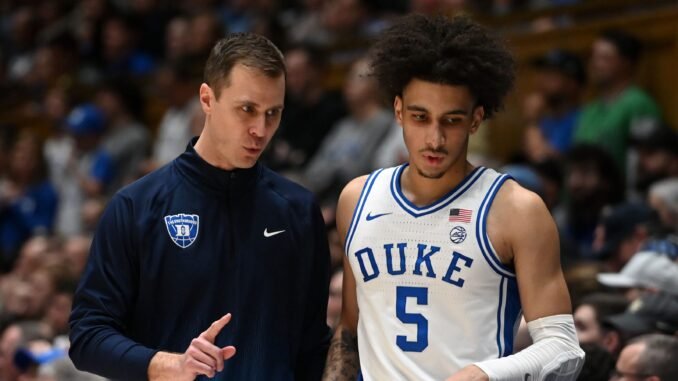
Duke basketball hopes to remove ’emergency’ designation off important reserve ahead of Final Four.
While most are focusing on defense in the upcoming Duke-Houston showdown, rebounding could be the real difference-maker. Securing the glass is always crucial, but it’s especially important against a physical and relentless team like Houston.
Houston’s identity is built on toughness, which extends beyond defense into rebounding. Controlling the defensive boards limits second-chance points and can lower Houston’s shooting efficiency.
Let’s look at the numbers:
Houston’s Top Rebounders:
- J’Wan Roberts – 6.3
- Joseph Tugler – 5.9
- Ja’Vier Francis – 5.1
- Mylick Wilson – 4.1
- Milos Uzan – 3.0
- Emanuel Sharp – 3.0
- Terrance Arceneaux – 2.7
- LJ Cryer – 2.3
Duke’s Top Rebounders:
- Cooper Flagg – 7.5
- Khaman Maluach – 6.8
- Sion James – 4.2
- Kon Knueppel – 3.9
- Maliq Brown – 3.7
- Tyrese Proctor – 3.1
- Patrick Ngongba – 2.8
- Mason Gillis – 2.6
Team Totals:
- Duke: 38.6 RPG
- Houston: 36.2 RPG
The totals are close, but what stands out is what happens when Houston loses:
- Auburn (74–69 win): Rebounds even at 33 each.
- Alabama (85–80 OT loss): Alabama outrebounded Houston 48–39.
- San Diego State (73–70 OT loss): Houston edged SDSU 40–38.
- Texas Tech (82–81 OT loss): Houston won the battle 38–37.
In those tight games, rebounding often played a pivotal role, especially when Houston lost the edge. The only recent close win was against Purdue, where Houston dominated the boards 38–29.
J’Wan Roberts was a standout in that game with 12 rebounds (five offensive). Other key contributors chipped in just enough to make a difference.
Still, rebounding isn’t just stats—it’s about grit and determination. NBA legend Charles Barkley, undersized for a forward, was an elite rebounder purely through effort and will. That’s the kind of energy teams need to beat Houston.
Duke’s roster, while statistically strong, includes three starting freshmen, whereas Houston is battle-tested and experienced. The Cougars resemble past gritty teams like Tony Bennett’s Virginia or Butler’s 2010 squad—hard to shake, always in the game.
Houston’s losses also show a pattern with shooting:
- Auburn: 41.4% FG, 38.5% 3PT, 5 made threes
- Alabama: 36.9% FG, 31.6% 3PT, 6 made threes
- San Diego State: 37.1% FG, 45.8% 3PT, 11 made threes
- Texas Tech: 45.3% FG, 35.7% 3PT, 5 made threes
Houston’s offensive production tends to drop when opponents control threes and boards. A good example is last year’s title game: UConn allowed Zach Edey his numbers but locked down the rest of the Purdue squad—and it worked. Duke might have a similar opportunity against Houston, even without a dominant post player like Edey in this matchup.
Against Tennessee, Houston shot just 42.4% overall and 36% from deep. Had Tennessee limited them to five threes (their average in most losses) and grabbed a few more defensive rebounds, the game could’ve been a lot closer—even with Tennessee’s poor shooting night.
And in Houston’s tight win over Purdue (62–60), they scored 20 second-chance points. Take just a couple of those away, and the result could flip.
The takeaway? If Duke can match Houston’s toughness, control the glass, and limit perimeter shots, the Cougars become beatable—though pulling that off is far easier said than done.
Leave a Reply