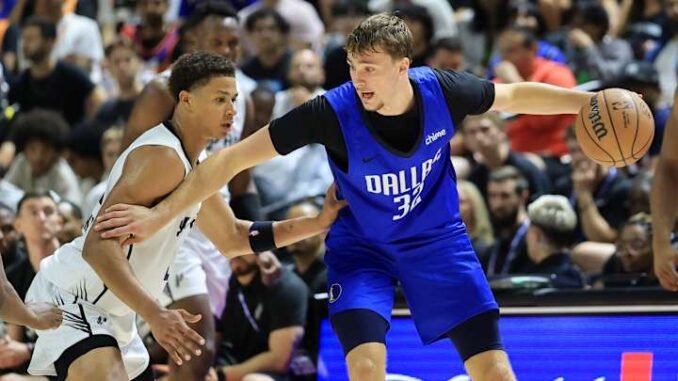
Mavericks’ New Puzzle: How Jason Kidd Might Shape Cooper Flagg’s Role in a Loaded Dallas Rotation
The Dallas Mavericks are standing at the edge of something fascinating not just a new season, but a new era. With Luka Dončić gone and Cooper Flagg now wearing No. 5 in Dallas blue, the Mavericks are a team in transition, a team with both an identity crisis and a golden opportunity. The talent is undeniable, but the fit? That’s what will keep head coach Jason Kidd awake at night.
And as preseason turns to the real thing, a question that would’ve sounded ridiculous six months ago suddenly feels legitimate: Could Cooper Flagg actually come off the bench?
It’s not as crazy as it sounds. The Mavericks’ roster, as it stands, is strangely top-heavy in the frontcourt and light in the backcourt. With D’Angelo Russell running the point and Anthony Davis holding down the middle, Kidd is juggling the presence of veterans like Klay Thompson and PJ Washington alongside the raw, fearless brilliance of Flagg who, even as a rookie, has already reshaped how Dallas plays.
Flagg’s two-way energy, vision, and shot-blocking instincts have made the Mavs faster, livelier, and frankly, more fun. But in the business of rotations, fun isn’t always the priority winning is. And that means lineups matter.
Option 1: Stick With the Current Plan — Flagg and Thompson Start, Washington Comes Off the Bench
This appears to be Dallas’s opening-night setup: D’Angelo Russell, Klay Thompson, Cooper Flagg, Anthony Davis, and Dereck Lively. On paper, it’s electric. You’ve got spacing, length, rim protection, and perhaps the most versatile rookie in the league.
But dig into last season’s numbers, and there’s reason for concern. When Davis and Thompson shared the floor without Washington, the Mavericks posted a -3.6 net rating per 100 possessions and an offensive rating that ranked in the bottom 4th percentile leaguewide. That’s not a typo their offense sputtered badly.
Flagg could change that, of course. He’s a connector, a glue guy with the instincts of a 10-year vet. His ability to push tempo, make reads, and guard multiple positions gives this group a balance they didn’t have before. But with Thompson needing rhythm shots and Davis preferring half-court flow, Dallas might have to live through some awkwardness before it all clicks.
Option 2: Bring Klay Off the Bench, Start Washington and Flagg Together
Now here’s where things get spicy. Washington isn’t the flashiest player on the roster, but within the Mavericks’ locker room, he’s considered the “heartbeat.” His combination of defense, rebounding, and quiet toughness keeps this team grounded.
When Washington and Davis shared the floor without Klay last season, Dallas had an absurd +37.3 net rating (albeit in limited minutes). The offense exploded to a 140.3 offensive rating numbers that would make even the old Warriors blush.
Imagine Flagg slotting in beside them. You get energy, switchability, and an ability to turn defense into offense in seconds. But the challenge here isn’t tactical it’s emotional. Klay Thompson didn’t leave Golden State to be a sixth man again. Asking him to embrace that role could rattle the locker room and test Kidd’s leadership early in the season.
Option 3: Slide Anthony Davis to the Five, Go Small and Fast
This is the lineup Mavericks fans would love to see — Flagg at the four, Washington at the three, Klay at the two, and Russell running point. It’s modern basketball at its purest: switch-heavy, up-tempo, and aggressive.
The problem? Davis doesn’t want it. He’s been vocal for years about preferring to play power forward, and history shows why physical wear and tear. When Dallas tried this configuration last season, it didn’t go well: a -35.3 net rating and an alarming 137.0 defensive rating.
Still, with Flagg now in the mix — who can guard centers on one end and run the break on the other — this “small-ball” idea might finally have legs. Flagg’s length and timing make up for what they lose in traditional size. It might be worth experimenting again when the season tightens up and the playoffs start to take shape.
Option 4: Flagg as the Super Sixth Man
Here’s the boldest thought: bring Cooper Flagg off the bench.
Before the pitchforks come out, consider the reasoning. Having Flagg lead the second unit gives Dallas a creative sparkplug someone who can initiate offense, guard across the board, and inject tempo when the starters slow down. It would also ease the pressure on a 19-year-old phenom who’s still adjusting to NBA pace and physicality.
When Dallas played lineups featuring Thompson, Washington, Davis, and a true center last season, the team posted a +5.4 net rating and a 108.0 defensive rating solid, dependable numbers. Flagg could then enter as a mismatch nightmare, taking advantage of tired defenders while learning from veterans in real time.
That said, the optics are tough. Flagg is already the face of the Mavericks’ rebuild, the franchise’s future. Benching him even temporarily could draw media noise and fan backlash. But Jason Kidd has shown before that he’ll make unpopular decisions if it helps his team win.
What It All Means
Cooper Flagg’s arrival has turned the Mavericks into must-watch television again. Dallas isn’t just playing basketball they’re building something. Every lineup tweak, every substitution, every possession feels like a step toward a new identity.
Maybe he starts, maybe he doesn’t. But whether Flagg’s bringing the ball up or swatting shots from the weak side, one thing’s certain the Mavericks have found their new cornerstone.
And if preseason is any indication, Dallas fans might be witnessing the beginning of something special a rookie who can run the point, block centers, and maybe, just maybe, redefine what the modern NBA forward looks like.
Because with Cooper Flagg in the mix, nothing about this Mavericks team feels ordinary anymore.
Leave a Reply