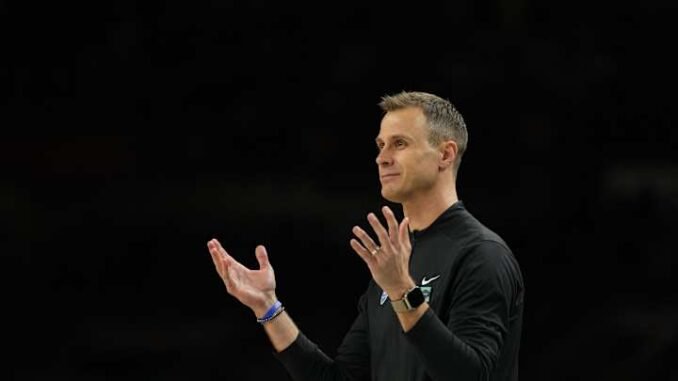
Jon Scheyer’s Defining Challenge: Can Duke’s Head Coach Finally Trust His Bench?
By almost any standard, Jon Scheyer’s early years at Duke have been a success. Three seasons, 89 wins, an undefeated home debut, an Elite Eight run, and a Final Four appearance all accomplished under the shadow of replacing a legend like Mike Krzyzewski. That résumé would make most programs envious. But at Duke, there is only one measuring stick: championships.
And for all his brilliance, Scheyer has fallen short of that ultimate prize.
It hasn’t been because of a lack of talent. Year after year, the Blue Devils are loaded with five-star recruits, NBA-caliber athletes, and experienced transfers. The problem has been subtler, buried in the rhythm of late-game collapses and postseason heartbreaks: Scheyer’s reluctance to trust his bench when the lights burn brightest.
The Houston Heartbreak
Last season’s bitter defeat to Houston is a haunting reminder of how close Duke was to breaking through. For 37 minutes, the Blue Devils controlled the game. Then, suddenly, the offense sputtered. What had been the nation’s top-rated attack froze in place, going more than seven minutes without a field goal.
The starters, exhausted and overmatched by Houston’s relentless defensive pressure, looked like they were running in quicksand. Yet on the bench sat Isaiah Evans, the freshman scorer who had already proven himself a microwave option earlier that year against Auburn. Sitting next to him was Mason Gillis, a transfer with a 39.3% career clip from beyond the arc exactly the kind of dagger-shooter who could have iced the game.
Neither entered. Duke’s lead evaporated. Their season ended.
The NC State Collapse
The year before, history repeated itself. Facing NC State in the Elite Eight, the Blue Devils were powerless against DJ Burns Jr. The Wolfpack big man scored at will, finishing with 29 points. Kyle Filipowski, Duke’s star, was worn down trying to defend him, his energy and production sapped.
The answer, at least on paper, was Sean Stewart. Less than a month earlier, the freshman forward had dropped 12 points and swatted three shots against NC State, proving he could disrupt Burns. But when the moment came, Stewart was glued to the sideline. Instead, Scheyer turned to graduate transfer Ryan Young, who was mercilessly picked apart possession after possession.
By the time Stewart finally got his shot, the Blue Devils were already buried.
A Pattern of Hesitation
These aren’t isolated incidents. They represent a larger pattern that has frustrated the Duke fanbase. Scheyer, for all his strengths as a motivator and tactician, has been hesitant to roll the dice on young players in high-stakes situations. His decisions have at times been overly cautious, leaning on veterans or tired starters rather than trusting the upside of his bench.
The ripple effect extends beyond the scoreboard. Stewart, for example, eventually left the program, his potential untapped. In today’s college basketball landscape, where the transfer portal can change a roster overnight, failing to develop and empower young talent is as costly as losing a game in March.
A Chance at Redemption
This year, though, Scheyer has a chance to rewrite his story. The 2025–26 Blue Devils may have the deepest roster in the nation. The arrival of the top-ranked freshman class headlined by Cayden Boozer, Sebastian Wilkins, and Nik Khamenia adds firepower to a group that already returns Isaiah Evans, Darren Harris, and Caleb Foster.
Unlike previous seasons, Duke has options everywhere. Need instant offense? Evans can light it up. Need toughness in the paint? Wilkins and Khamenia can provide it. Need floor spacing? Harris is a proven shooter.
The challenge for Scheyer is no longer about finding enough talent it’s about using it.
The Road Ahead
The Blue Devils’ path will not be easy. Their non-conference schedule is a gauntlet, with matchups against national contenders that will test their chemistry early. The back half of the ACC slate is brutal, packed with road games against Louisville, UNC, and Virginia. To secure a top seed in March, Duke will need every weapon in its arsenal.
That means avoiding the mistakes of the past. It means giving Evans minutes when the offense goes cold, trusting Wilkins when Filipowski’s successor is in foul trouble, and making sure Harris isn’t wasted when Duke needs a shooter in crunch time.
The Verdict
Jon Scheyer has proven he can win. But to transform those wins into championships, he must evolve. The margin for error in March is razor-thin, and the difference between heartbreak and a banner often comes down to one substitution, one shot, one player who finally got their chance.
This Duke roster is built to win it all. The only question is whether Scheyer will trust them enough to make it happen.
Leave a Reply