Inside the Pivot: How Duke Handled Cedric Coward’s Draft Surge After His Commitment
In the ever-fluid world of college basketball, few things are guaranteed not even a high-profile transfer commitment. Just ask Jon Scheyer and the Duke Blue Devils.
Cedric Coward, one of the top players in the NCAA Transfer Portal this past spring, committed to Duke in late April with the expectation of joining a loaded Blue Devils roster. But just one month later, he made the surprising decision to stay in the 2025 NBA Draft a move that left Duke without a player they had once penciled into a key role. Still, how both sides managed that process became a testament to transparency, mutual respect, and quick adaptation.
Speaking to the media this week, Scheyer shed light on the inner workings of Coward’s commitment and exit. Rather than expressing frustration, the Blue Devils’ head coach praised Coward’s team for being up front from the start and credited that openness as key to helping Duke regroup.
“It’s a crazy process, right? And you want to deal with people who are transparent,” Scheyer said. “Cedric, his family, his agent they were pure class. He ends up going eleventh in the draft. I couldn’t be happier for him.”
Scheyer revealed that even while Coward was still committed, there were already honest conversations happening behind the scenes. The Blue Devils made it clear they needed to move forward with their roster in case Coward chose the pro route. That proactive communication proved vital.
“We had conversations weeks ahead of the final news, just saying, ‘We can’t wait too long,’” Scheyer explained. “We supported him fully but had to continue building our team. When he committed, the buzz was real. I’ve never seen anything like it.”
Coward’s rise was meteoric. Despite playing just six games at Washington State due to injury, he averaged 17.7 points on 55.7% shooting, 7.0 rebounds, 3.7 assists, and 1.7 blocks. Before that, he played at Eastern Washington and Division III Willamette University an unconventional path that only added to the intrigue surrounding his draft stock.
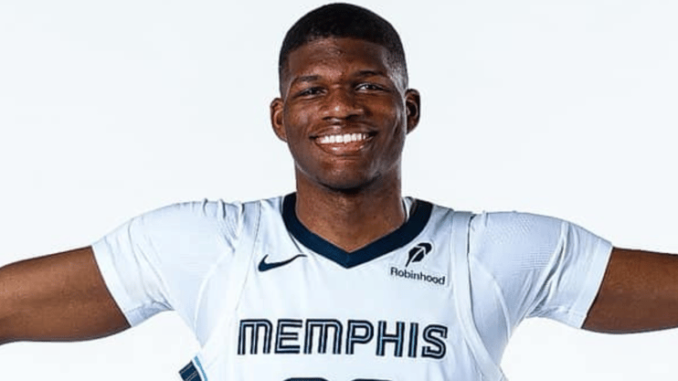
Following strong pre-draft workouts and a standout NBA Combine, Coward ultimately kept his name in and was selected No. 11 overall by the Memphis Grizzlies, following a draft-night trade from Portland.
Though his departure left a temporary hole, Duke was ready. In the time leading up to Coward’s final decision, the Blue Devils added four-star Dame Sarr from FC Barcelona and reclassified guard Sebastian Wilkins, strengthening their freshman class. Those additions plus five returning players and three other incoming freshmen helped soften the blow.
“We’d followed Dame for a long time. He’s different, but we believed in what he could bring,” said Scheyer. “And Sebastian was a huge get. When you add in what we already had? It made the spring a great one for us.”
Losing a player of Coward’s caliber especially one who had already committed might have set another program back. But Duke’s handling of the situation showed how transparency and real-time decision-making can turn uncertainty into stability.
As Scheyer noted, coaching today is about “making real-time decisions with imperfect information.” That philosophy not only helped Duke manage the Coward situation but left the Blue Devils in a strong position heading into the 2025–26 season even if the roster looks a little different than originally planned.
Leave a Reply