The first few weeks of the college basketball season often feel like the stage-setting portion of a long play hints of greatness here, warning signs there, and just enough chaos to make you question what you thought you knew. But as the 2025–26 campaign begins to take shape, one thing is becoming increasingly difficult to ignore: the SEC isn’t carrying itself like the heavyweight it was a year ago, and the Big Ten is wasting no time reclaiming ground.
Kentucky’s 83–66 loss to Michigan State in the Champions Classic didn’t just sting it symbolized the imbalance unfolding across the sport. In a matchup that typically features two powerhouses exchanging blows on the national stage, only the Spartans looked like they came prepared to throw punches. That defeat pushed the SEC’s record against other high-major conferences to 6–11, a sharp contrast to last season’s dominant 59–19 advantage that fueled a historic 14-bid NCAA Tournament haul.
This year’s numbers aren’t just a bad week or a couple of unlucky finishes. They are the early tremors of a conference looking surprisingly wobbly, while the Big Ten, sitting at 12–4, appears as steady as ever. In head-to-head matchups, the Big Ten’s 4–1 edge over the SEC might look small on paper, but it carries weight when viewed against the expectations each league brought into the season.
Nowhere is the shift more obvious than in the latest CBS Sports Bracketology projections. The Big Ten sits atop the board with a projected 12 tournament bids, highlighted by Illinois and Purdue earning No. 1 seed status something that would have felt almost inevitable last season, but suddenly feels like a declaration of power in a season where nothing has gone to script for the sport’s southern super-conference.
Meanwhile, the SEC still boasting plenty of talent, but lacking consistency slides in with 11 projected bids. That number sounds respectable until you remember where the bar was set a season ago. The model still believes in Tennessee and Vanderbilt, and Kentucky remains in the mix even after its loss, but there is a noticeable difference: the SEC no longer looks like it is running away from the rest of the country.
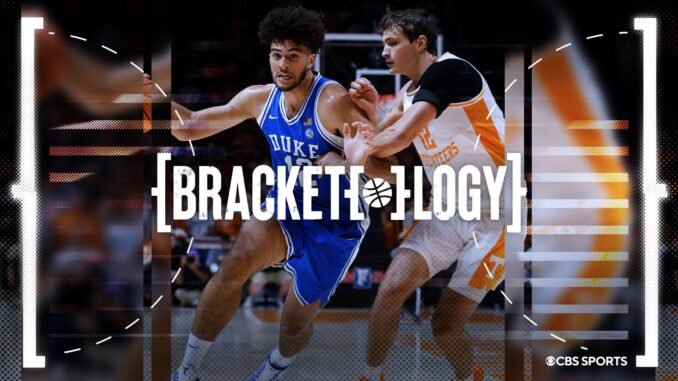
Duke’s placement on the opposite side of the bracketology spectrum tells an entirely different story. The Blue Devils not only hold a projected No. 1 seed in the East region, but they’re doing it with a young core that’s taking the college basketball world by storm. Cameron Boozer’s rise has been one of the biggest stories of the early season, especially after his standout performance against Kansas at Madison Square Garden. Duke is not just winning; the program is redefining its identity around a freshman whose blend of size, poise, and skill looks increasingly like the foundation of a deep March run.
Michigan, St. John’s, and a handful of other early headliners haven’t fared quite as well. Michigan’s shaky wins over Wake Forest and TCU didn’t impress the model, and St. John’s loss to Alabama, paired with the Big East’s underwhelming start, nudged both out of their early No. 1 seed projections. It’s early enough for those teams to shift the narrative, but the window for mistakes becomes smaller the deeper a conference digs itself into a troublesome reputation.
The Big Ten, though, has more than just the usual suspects pushing the pace. Indiana, now operating under first-year head coach Darian DeVries, has become one of the season’s most surprising climbers. The Hoosiers’ 100–77 demolition of Marquette was impossible to miss, and their commitment to spacing and three-point shooting an identity shift from the Woodson era has breathed life back into the program. They’re suddenly projected as a No. 5 seed, and the combination of system, efficiency, and conference strength suggests the climb may not stop there.
Then there’s Vanderbilt, a team that seems to have decided offense is optional only if you want to be boring. The Commodores are scoring at a ridiculous 101.5 points per game, and the early win over UCF a team fresh off upsetting Texas A&M—has vaulted them into national curiosity. If they keep this pace, the bracketology model suggests something nearly unheard of: Vanderbilt receiving a top-three seed for the first time since 1993. It’s too early for Nashville to print shirts and posters, but optimism is suddenly a foreign currency in the SEC, and Vanderbilt might be holding more of it than anyone expected.
As for the bubble and it’s never too early for a bubble the margins are just as intriguing. Northwestern, Creighton, SMU, and Colorado State hold the final four at-large bids. Mississippi State, LSU, San Diego State, and Cincinnati sit just outside the door, hoping for an invitation. Those four teams are talented enough to climb into the field, but they’ll need statement wins, the kind the SEC isn’t producing often enough right now.
Three weeks into the season, this all might change. Teams grow, rosters settle, chemistry builds, and a weak November can transform into a powerful January in the blink of an eye. But the early message college basketball is sending is clear: the Big Ten came ready for a fight, the SEC is wobbling, and the bracket is shifting faster than anyone expected.
If this is only the beginning, March might be louder, wilder, and more unpredictable than ever.
Leave a Reply