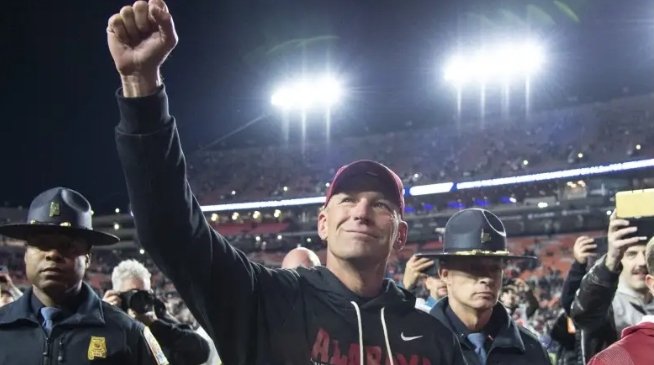
The recruiting landscape in college football is as competitive as the sport itself, and few pursuits capture that intensity better than the race for elite defensive talent. One of the most compelling storylines emerging in the 2026–2027 recruiting cycle revolves around Kalen DeBoer and the Alabama Crimson Tide positioning themselves among the top programs vying for five-star cornerback John Meredith III.
As one of the most coveted prospects in the nation, Meredith’s recruitment is shaping into a high-stakes contest involving powerhouse programs across the country. For Alabama, securing his commitment would not only strengthen an already formidable defense but also reinforce DeBoer’s early legacy as the successor to a dynasty built on elite recruiting and player development.
The Rise of John Meredith III: A Generational Talent
John Meredith III is not just another highly ranked recruit he is widely considered one of the top overall players in his class. Standing at approximately 6-foot-2 with exceptional length, speed, and athleticism, Meredith embodies the modern prototype of a lockdown cornerback.
Recruiting services consistently rank him among the top five players nationally, with some outlets placing him as high as No. 1 overall. His physical traits combined with elite track speed and explosive jumping ability make him a nightmare matchup for wide receivers. His versatility allows him to excel in both man and zone coverage schemes, and his instincts set him apart from even other five-star prospects.
Meredith’s ability to impact the game goes beyond pass coverage. He is known for his ball skills, recovery speed, and physicality in run support, making him a complete defensive back. These attributes have made him a priority target for nearly every major college football program in the country.
Alabama’s Defensive Identity Under Kalen DeBoer
When Kalen DeBoer took over as head coach at Alabama, he inherited one of the most successful programs in college football history. But with that legacy came enormous expectations. Known primarily for his offensive acumen earlier in his career, DeBoer has quickly demonstrated a commitment to maintaining Alabama’s defensive dominance.
Alabama’s defensive philosophy especially in the secondary has long emphasized length, physicality, and technical discipline. Under DeBoer and defensive backs coach Mo Linguist, that blueprint remains unchanged. Meredith fits perfectly into this mold.
The Crimson Tide have a track record of developing elite defensive backs into NFL talent, which remains a powerful recruiting pitch. This tradition continues to resonate with top prospects, including Meredith, who is well aware of Alabama’s history of producing professional-caliber players.
A Crowded Field: Alabama Among Meredith’s Top Schools
Meredith has narrowed his list of potential destinations to a group of elite programs, including Alabama, Texas A&M, Texas, Ohio State, Notre Dame, and Miami.
Each of these schools offers unique advantages:
- Texas A&M has the benefit of proximity and has been aggressively recruiting him.
- Texas emphasizes keeping top in-state talent home.
- Ohio State boasts a strong track record of developing defensive backs.
- Notre Dame and Miami provide national exposure and competitive programs.
Despite this intense competition, Alabama remains firmly in contention. Meredith’s decision to include the Crimson Tide among his top choices signals the program’s continued relevance in the national recruiting landscape.
However, reports suggest that Texas A&M may currently hold a slight edge, thanks to its sustained recruiting efforts and geographic advantage.
Why Alabama Is Still a Major Player
Even with fierce competition, Alabama’s case for Meredith is compelling. Several key factors keep the Crimson Tide near the top of his list:
1. Proven Development Pipeline
Alabama has consistently produced NFL-ready defensive backs. This reputation is a major draw for recruits who aspire to play at the highest level.
2. Immediate Impact Opportunities
Recent seasons have shown that young defensive backs can earn playing time quickly at Alabama. Players like Dijon Lee Jr. have already demonstrated the potential for early success in the program.
3. Scheme Fit
Meredith’s size and athletic profile align perfectly with Alabama’s defensive scheme, which prioritizes long, physical corners capable of matching up with elite SEC receivers.
4. Recruiting Momentum
Alabama’s recent recruiting classes have remained among the best in the nation, including multiple five-star signees such as Jorden Edmonds. This sustained success signals program stability and continued excellence.
The Importance of Official Visits
Official visits will play a crucial role in Meredith’s decision-making process. Alabama has already secured a visit date, along with several other top programs.
These visits provide opportunities for recruits to:
- Experience campus culture
- Interact with coaching staff and players
- Evaluate facilities and academic support
- Envision their role within the program
For DeBoer and his staff, these visits are critical moments to make a lasting impression and differentiate Alabama from its competitors.
Recruiting in the Post-Saban Era
One of the most intriguing aspects of this recruitment is what it represents for Alabama’s future under Kalen DeBoer. Following the legendary tenure of Nick Saban, there were questions about whether Alabama could maintain its recruiting dominance.
So far, the answer appears to be yes.
DeBoer has demonstrated an ability to connect with recruits and maintain Alabama’s reputation as a premier destination. Landing a player like Meredith would further solidify his standing and signal that the program’s elite status remains intact.
Challenges Ahead
Despite its advantages, Alabama faces significant challenges in securing Meredith’s commitment:
- Geographic Competition: Texas-based programs have a natural advantage.
- Recruiting Pressure: Multiple top programs are investing heavily in his recruitment.
- Unpredictability: Recruiting decisions can shift quickly based on relationships, visits, and personal preferences.
Additionally, the evolving landscape of college football including NIL opportunities and transfer portal dynamics adds new layers of complexity to the process.
What Meredith’s Commitment Would Mean
If Alabama were to land John Meredith III, the impact would be substantial:
Defensive Upgrade
He would immediately enhance Alabama’s secondary, providing elite coverage ability against top-tier offenses.
Recruiting Statement
Securing one of the nation’s top players would send a strong message about Alabama’s continued dominance.
Long-Term Success
Players of Meredith’s caliber often become program cornerstones, contributing to sustained success over multiple seasons.
The Bigger Picture: A National Recruiting Battle
Meredith’s recruitment is more than just a decision about one player it reflects broader trends in college football recruiting. Programs are increasingly competing on a national scale, with elite prospects considering opportunities far beyond their home states.
For Alabama, competing for and potentially winning these battles is essential to maintaining its position among college football’s elite programs.
Conclusion: A Defining Recruitment for Alabama’s Future
The pursuit of John Meredith III represents a pivotal moment for Kalen DeBoer and the Alabama Crimson Tide. As one of the nation’s top recruits, Meredith embodies the kind of talent that can shape the future of a program.
While Alabama faces stiff competition from several powerhouse schools, its combination of tradition, development, and opportunity keeps it firmly in the race. Whether or not Meredith ultimately chooses the Crimson Tide, this recruitment highlights the program’s continued ability to compete at the highest level.
For DeBoer, landing Meredith would not just be a recruiting victory it would be a defining achievement in his tenure, reinforcing Alabama’s status as a destination for elite talent and ensuring that the program remains a force in college football for years to come.
Leave a Reply