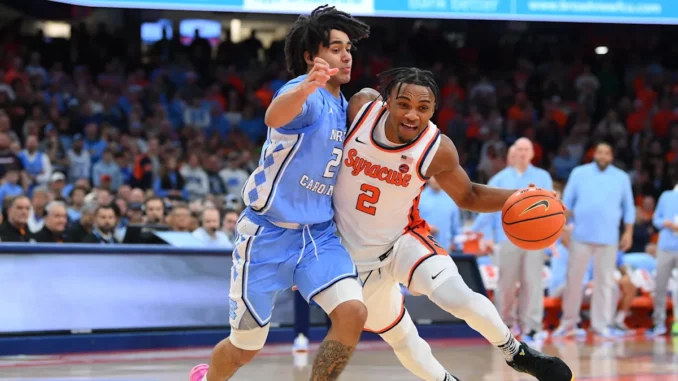
In the ever-evolving landscape of college athletics, the game behind the game—Name, Image, and Likeness (NIL)—is quickly becoming the most important battle being fought off the court. And according to Syracuse head coach Adrian Autry, the Orange are very much in that fight.
Speaking recently about his program’s efforts in the NIL space, Autry made it clear: Syracuse basketball is “competitive.” But when asked about how his school stacks up against the powerhouses of college basketball, one figure stole the spotlight—$14 million, the reported NIL budget at North Carolina.
That jaw-dropping number highlights just how high the stakes have become, even for traditional blueblood programs like Syracuse. And while Autry remains optimistic, the budget gap paints a telling picture of the challenges programs face in trying to recruit and retain top talent in this new era.
Syracuse: Staying Afloat in a Big-Spending World
Autry, entering his second season at the helm in Syracuse, emphasized that the Orange have been active and resourceful in leveraging NIL opportunities for their players. “We’re competitive,” he said. “We’re doing what we need to do to take care of our guys.”
That may be true, but in a world where elite players are increasingly factoring NIL deals into their decisions, “competitive” can be a moving target.
With UNC reportedly operating with a $14 million NIL budget, the margin for error—and for programs with less financial muscle—continues to shrink. Carolina’s war chest places it firmly among the top-tier programs that are not just surviving in the NIL era but thriving.
The Power of the Dollar—and the Brand
The Tar Heels’ ability to command a $14 million NIL pool speaks to a broader trend in college sports: the blending of athletic tradition with modern marketing. North Carolina has the perfect storm—massive national brand, NBA pipeline, and passionate alumni with deep pockets. That’s a tough combination for any program to match.
And it’s not just about paying players outright. Programs with larger NIL budgets can offer their athletes top-tier branding opportunities, access to national advertisers, custom merch deals, social media support, and connections that can last long beyond their playing days.
What It Means for Syracuse
Syracuse, while still a storied program with decades of success and a loyal fanbase, isn’t yet operating in the same financial orbit. Autry’s comments were both a vote of confidence and a call to arms: if Syracuse wants to stay in the national conversation, NIL investment will have to grow.
The good news? Syracuse isn’t standing still. Local collectives, boosters, and business leaders have already begun increasing their efforts, and Autry has embraced the new rules of engagement. But catching up to the likes of UNC, Kentucky, and Duke may take more than just effort—it may require a reimagining of what Syracuse basketball can offer beyond the court.
The Road Ahead
The NIL arms race shows no signs of slowing down, and schools with massive budgets, like UNC’s $14 million, are setting the tone. The programs that adapt and innovate will rise. The ones that hesitate risk being left behind.
Adrian Autry believes in his team, his school, and his plan. But as long as the NIL scoreboard reads UNC: $14 million, the question remains: Can Syracuse compete?
The game has changed—and in this new era, every dollar matters.
Leave a Reply