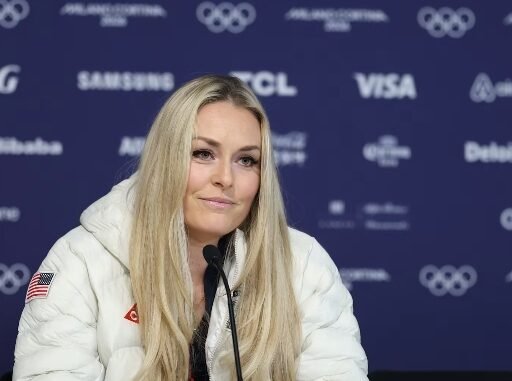
Lindsey Vonn Fires Back: A Champion’s Defiant Response to Retirement Calls
In the world of elite sports, few names command as much respect, admiration, and emotional investment as Lindsey Vonn. A legend of alpine skiing, an Olympic gold medalist, and one of the most decorated athletes in winter sports history, Vonn has built a career defined by resilience, comebacks, and an unyielding passion for competition. Yet in 2026, amid one of the most physically and emotionally challenging moments of her career, she found herself confronting a different kind of pressure not from competitors or the slopes, but from fans urging her to retire.
What followed was not silence or submission, but a powerful and deeply personal response that reaffirmed her identity, her autonomy, and her enduring love for the sport.
A Career Defined by Defiance and Comebacks
Before examining the recent controversy, it is important to understand the context surrounding Vonn’s response. At 41 years old, she is already considered one of the greatest alpine skiers of all time. Her career includes Olympic medals, World Cup titles, and a legacy of dominance that has inspired generations.
After initially retiring in 2019 due to chronic injuries, Vonn made a stunning comeback years later, driven by a renewed sense of purpose and aided by advancements in medical treatment, including a partial knee replacement. Her return was not merely symbolic it was competitive. She won races, reached podiums, and even climbed back to the top rankings, proving doubters wrong once again.
However, her comeback came with risks and those risks materialized dramatically during the 2026 Winter Olympics.
The Injury That Sparked the Debate
During the Olympic downhill event, Vonn suffered a devastating crash early in her run. The incident resulted in severe injuries, including a complex fracture in her leg that required multiple surgeries. In fact, reports indicated that the situation was so serious that she was at risk of losing her leg entirely due to complications.
The aftermath of the crash was brutal: physical pain, a long rehabilitation process, and uncertainty about her future. Yet as she began her recovery, a different narrative emerged in the public sphere one that questioned whether she should ever return to competition.
Fans, commentators, and even close figures in her life began suggesting that it was time for her to retire.
The Fan Comment That Triggered a Response
Social media, as it often does, became the battleground for public opinion. Among the flood of messages were comments urging Vonn to step away from skiing permanently. Some expressed concern for her health, while others were more blunt, even critical.
One fan reportedly told her to “put your feet up and be done,” implying that continuing her career would be reckless given her age and injuries.
For many athletes, such comments might have gone unanswered. But Vonn chose to respond and her reply captured the essence of her career.
“I’ll Decide My Future” – Vonn’s Powerful Reply
Vonn’s response was both direct and deeply revealing. She made it clear that decisions about her future would not be dictated by fans, critics, or even well-meaning supporters.
She stated emphatically that she is “the only one” who will decide when and if she retires, adding that she does not need permission from anyone to pursue what makes her happy.
Even more striking was her emotional clarity when addressing accusations of ego. When a critic suggested her refusal to retire was driven by ego, she responded:
“You’re mistaking my ego for joy… I love skiing.”
This short but powerful statement encapsulated everything about her stance. For Vonn, skiing is not just a profession it is a source of identity, fulfillment, and joy.
Autonomy in Sports: A Larger Conversation
Vonn’s response resonates far beyond her personal situation. It touches on a broader issue in professional sports: who gets to decide when an athlete’s career ends?
Historically, athletes especially those past their perceived “prime” face intense scrutiny. Age, injuries, and performance dips often lead to external pressure to retire. In many cases, these conversations overshadow the athlete’s own perspective.
Vonn’s stance challenges this narrative. By asserting control over her own timeline, she reinforces the idea that athletes are not merely public figures or entertainment commodities they are individuals with agency.
Her message is clear: retirement is not a public vote. It is a personal decision.
The Psychology of Passion and Persistence
One of the most compelling aspects of Vonn’s response is the emotional depth behind it. Her insistence on continuing at least keeping the option open is rooted in passion.
Elite athletes often describe their sport as a calling rather than a job. For someone like Vonn, who has spent decades on the slopes, walking away is not just a career decision it is a life transition.
Her comment about joy highlights an important psychological truth: passion does not diminish with age. If anything, it can deepen.
This explains why many athletes attempt comebacks or delay retirement. It is not always about chasing glory it is about staying connected to something that defines them.
Balancing Risk and Legacy
Of course, the concerns raised by fans are not entirely unfounded. Vonn’s injury history is extensive, and her recent crash underscores the physical risks of continuing at the highest level.
Critics argue that her legacy is already secure. With numerous victories and records, she has nothing left to prove. From this perspective, retirement would preserve her health and her legacy.
But Vonn’s perspective is different. For her, legacy is not just about past achievements it is about how she chooses to live in the present.
Her willingness to embrace uncertainty, to face risk, and to continue pursuing what she loves is itself part of her legacy.
Recovery First, Decisions Later
Despite her defiant tone, Vonn has also been pragmatic. She has made it clear that her immediate focus is not on returning to competition but on recovery.
She emphasized that she is not currently thinking about retirement or racing. Instead, she is prioritizing rehabilitation and regaining normalcy in her life.
This balanced approach shows that her response is not impulsive. She is not rushing back to the slopes or making definitive statements about her future. Rather, she is giving herself time time to heal, reflect, and decide.
Inspiration Beyond the Slopes
For fans around the world, Vonn’s response carries a powerful message. It is not just about skiing it is about autonomy, resilience, and self-belief.
Her journey reflects a universal struggle: the tension between external expectations and internal desires.
Whether in sports, careers, or personal life, people often face pressure to conform to others’ timelines and judgments. Vonn’s refusal to do so serves as a reminder that fulfillment comes from within, not from public approval.
Conclusion: A Champion on Her Own Terms
The story of Lindsey Vonn responding to a fan’s request for her to retire is more than a moment of social media exchange it is a defining chapter in her legacy.
At a time when she could have quietly accepted the narrative being written around her, Vonn chose to speak. She chose to assert her independence, to defend her passion, and to remind the world that her journey is hers alone to shape.
Her words firm, honest, and unapologetic reflect the same qualities that made her a champion on the slopes: courage, determination, and authenticity.
Whether she ultimately returns to competition or decides to retire, one thing is certain: it will be on her terms.
And in a world that often tries to decide for others, that may be her greatest victory of all.
Leave a Reply