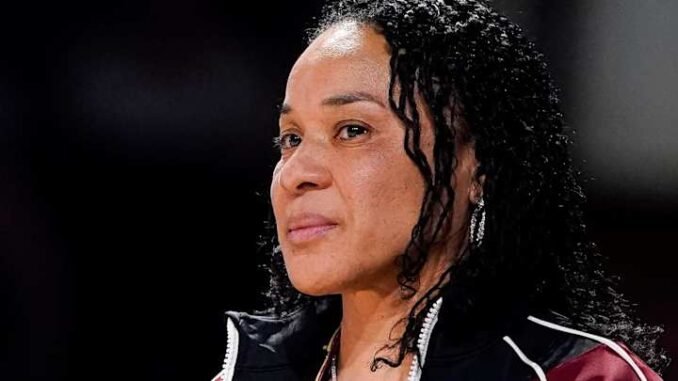
“This Was Never About Basketball”: Dawn Staley Breaks Silence on MiLaysia Fulwiley’s Stunning Transfer to LSU
In a move that has shaken the foundation of women’s college basketball, MiLaysia Fulwiley the dazzling, hometown phenom who lit up Colonial Life Arena with every crossover and coast-to-coast highlight has officially transferred from South Carolina to bitter SEC rival LSU. But while fans are still grappling with the emotional aftershock, it was Dawn Staley’s raw, vulnerable response that reframed the entire story.
And it wasn’t about basketball. At least, not entirely.
Fulwiley’s departure was a thunderclap that echoed far beyond the hardwood. She wasn’t just another player in the portal. She was Columbia’s own a local legend, a Gamecock through and through. Her flair, her fearlessness, her joy on the court had come to symbolize the next era of Staley’s dynasty. And now, in what many view as the ultimate twist, she’s headed into the arms of Kim Mulkey’s LSU powerhouse.
When Staley finally addressed the media, the usual poise remained but there was something else in her voice. Something heavier.
“This was never about basketball,” she said quietly. “Sometimes, the reasons players make these decisions go beyond the game. And as much as it hurts, all I can do is wish her the best.”
It wasn’t anger. It wasn’t deflection. It was heartbreak measured, mature, and unmistakable.
Within hours, the comment went viral, fueling speculation and commentary across every corner of social media. Theories exploded: Was it NIL? Was it culture clash? Was there internal tension? Fans, still reeling, searched for meaning. But beneath the noise, Staley’s message remained firm: she wouldn’t cast Fulwiley as the villain.
“I’m not here to villainize anyone,” she added. “MiLaysia has to do what’s best for her. That’s the reality of college sports now.”
Indeed, college athletics have changed. NIL money has rewritten recruiting wars, blurred loyalties, and fast-tracked decisions once governed by legacy and development. And LSU, under Mulkey, has embraced this brave new world with unapologetic vigor. Their collective is said to offer some of the most lucrative deals in the country life-altering money for top-tier talent.
But even that might not tell the whole story.
Insiders whisper that Fulwiley’s decision was deeply personal more than just about money or minutes. “There were factors people don’t see,” one source close to her family said. “It wasn’t just about basketball. It was about growth, identity, and where she sees herself in this next phase of her life.”
For those who followed Fulwiley’s rise, it’s a jarring turn. Her chemistry with teammates like Raven Johnson and Chloe Kitts was undeniable. On paper, her role in Columbia was only growing. After South Carolina’s undefeated national championship season, Fulwiley seemed poised to step into an even bigger spotlight.
And yet, something shifted.
Maybe it was a yearning for more freedom on the floor. Maybe it was the pull of a different culture. Maybe just maybe it was a young woman realizing that sometimes your dreams outgrow your surroundings, even if those surroundings once felt like home.
“She’s at a stage where she’s figuring out who she is,” a former AAU coach said. “Not just as a player, but as a person. Sometimes that means making a move that looks crazy to the outside world.”
Dawn Staley, ever the stateswoman, responded not with bitterness but with perspective.
“Players have their own paths,” she said. “My job isn’t to control them it’s to prepare them for life.”
The words landed like a prayer for peace in a landscape riddled with judgment. In an era where players are brands, coaches are CEOs, and loyalty can vanish overnight, Staley reminded everyone that behind every decision is a human being. A teenager, even. One navigating an unforgiving spotlight.
Still, for Gamecock Nation, this one stings. Fulwiley wasn’t just a star—she was a symbol. And watching that symbol put on purple and gold next season will be a gut punch few are ready for.
But as the dust settles, one truth remains:
“This was never about basketball.”
And maybe that’s the hardest part to accept.
Because if not basketball… then what?
And can we ever really know?
Leave a Reply